About This Trek / Tour
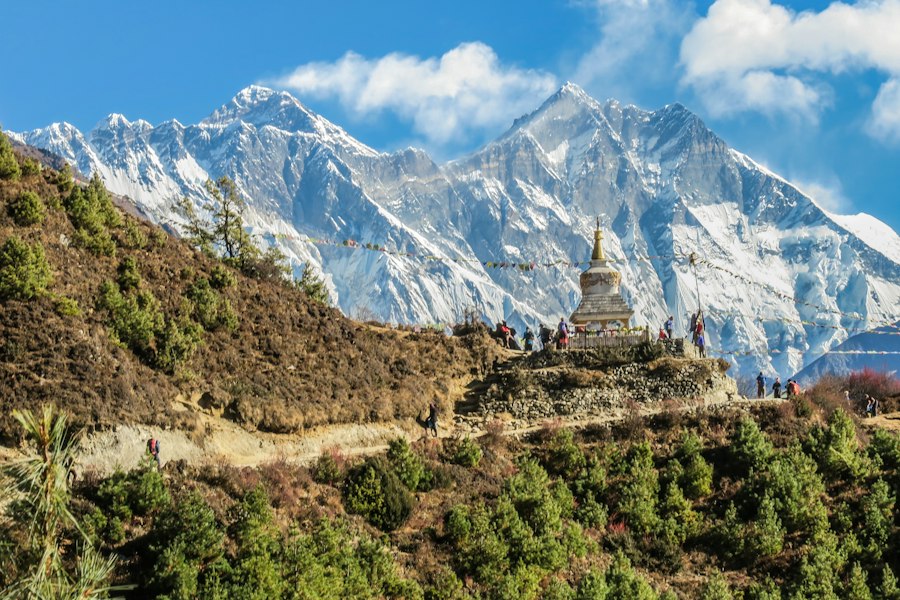
The Everest Base Camp Classic Trek is Nepal's most celebrated high-altitude journey. Standing at the foot of the world's highest mountain at 5,364m is a moment of pure awe that no photograph can fully capture. This 14-day itinerary is crafted to give you the best possible acclimatisation, safety and cultural immersion along the way.
You'll fly into Lukla's legendary Tenzing-Hillary Airport and trek through the heartland of the Sherpa people — bustling Namche Bazaar, the sacred Tengboche Monastery, yak-grazed meadows of Dingboche and the crevasse-crossed Khumbu Glacier. The final push to Base Camp delivers one of the most extraordinary perspectives in mountain adventure travel.
Acclimatisation Days: This itinerary includes two strategic rest days — at Namche Bazaar (3,440m) and Dingboche (4,410m) — following the "climb high, sleep low" principle to minimise altitude sickness risk.
Day-by-Day Itinerary
Arrive in Kathmandu (1,400m). Transfer to your hotel in Thamel. Afternoon briefing with your lead guide covering permits, equipment checks and the trek plan. Welcome dinner at a traditional Newari restaurant.
Early morning 35-minute scenic flight to Lukla (2,860m). Begin trekking down the Dudh Koshi valley through rhododendron forest to Phakding (2,610m) — 3.5 hours, 8km.
Cross the famous Hillary Suspension Bridge over the roaring Dudh Koshi gorge and ascend steeply through forest to Namche Bazaar (3,440m) — the Sherpa capital. 6 hours, 11km. First views of Everest on the ridge above Namche.
Rest day at Namche. Hike up to the Everest View Hotel (3,880m) for a commanding panorama of Everest, Lhotse, Nuptse and Ama Dablam. Visit the Sherpa Culture Museum. Evening stroll through the Saturday market.
Trek along the high trail with continuous views of the Everest massif. Descend to the Dudh Koshi, cross, and climb to Tengboche Monastery (3,867m) — one of Nepal's most sacred sites perched above a dramatic river confluence. 5 hours, 10km.
Descend through birch forest to Pangboche (3,985m), home to the oldest monastery in Khumbu, then climb across open moorland to Dingboche (4,410m). 5 hours, 12km. Views of Ama Dablam dominate.
Day hike to Nangkartshang Peak (5,050m) for sweeping views of Makalu, Cho Oyu and Lhotse. Afternoon free for rest and hydration. Medical check by guide.
Trek past the Thukla memorials — stone cairns honouring climbers who died on Everest — and continue along the lateral moraine to Lobuche (4,940m). 5 hours, 8km. Weather can be cold and windy.
The summit of your trek! Early start, hike across the Khumbu Glacier moraine to Gorak Shep (5,164m) for tea, then continue to Everest Base Camp (5,364m). Stand at the foot of the world's greatest mountain. Return to Gorak Shep to sleep. 7–8 hours, 13km.
Pre-dawn ascent of Kala Patthar (5,545m) — the best vantage point for Everest's true summit pyramid lit by sunrise. Descend all the way to Pheriche (4,240m). 7 hours, 16km.
Long descent through Pangboche and Tengboche, retracing through rhododendron forests back to Namche Bazaar (3,440m). 6 hours, 18km. Legs will be tired but spirits high!
Final trekking day — descend through Phakding back to Lukla (2,860m). Celebration dinner with your guide and porter team. 6 hours, 18km.
Morning flight back to Kathmandu (weather permitting — allow buffer days). Transfer to hotel. Afternoon free for shopping, spa or Thamel exploration. Farewell dinner at a rooftop restaurant.
Transfer to Tribhuvan International Airport for your onward flight. End of the Everest Base Camp Classic Trek.
What's Included
- All airport / hotel transfers in Kathmandu
- Lukla return flights (Kathmandu–Lukla–Kathmandu)
- 2 nights hotel in Kathmandu (3-star, B&B)
- 11 nights teahouse accommodation on trek
- All meals on trek (breakfast, lunch & dinner)
- Sagarmatha National Park entry permit
- TIMS (Trekkers' Information Management System) card
- Experienced licensed English-speaking guide
- One porter per two trekkers (max 15kg baggage)
- Guide & porter insurance, food, accommodation & salary
- Comprehensive first-aid kit & pulse oximeter
- Government taxes & service charges
Not Included
- Nepal visa fees ($30–50 depending on nationality)
- International airfare to/from Kathmandu
- Travel & medical evacuation insurance (required)
- Personal trekking gear (boots, sleeping bag, etc.)
- Beverages, snacks & extra meals beyond inclusions
- Hot showers & battery charging on trek (~$1–3/time)
- Tips for guide and porter (recommended)
- WiFi on the trail (available at extra cost in lodges)
- Helicopter evacuation if required
- Items of personal nature
Practical Travel Tips
Best Time to Trek: March–May (spring) and September–November (autumn) offer stable weather, clear skies and the best mountain views. Avoid the monsoon (June–August) for safety.
Fitness Level: You should be comfortable walking 5–7 hours daily on uneven terrain with a light daypack (4–5kg). Prior trekking experience at altitude is helpful but not mandatory.
Altitude Sickness: Never ascend if you have a severe headache, vomiting or confusion. Our guides monitor symptoms daily. Diamox (acetazolamide) can help with acclimatisation — consult your doctor before the trek.
Essential Gear: Warm down jacket (–20°C rated), waterproof shell, thermal baselayers, sturdy trekking boots, trekking poles, wide-brim sun hat, UV sunglasses, and a 40-litre daypack.
Insurance: Travel insurance covering helicopter rescue up to 6,000m is mandatory. We can recommend reputable providers if needed.